Focus. Change your Outlook
Gain Compassion. Find your Flow
Courses Open for Registration
〰️
Courses Open for Registration 〰️
Coming To Our Senses

Quick Guide
-
Coming to Our Senses (CTOS) teaches practical mindfulness for wellbeing using applied theatre, group sharing, journaling, and guided meditation. It’s creative, engaging, and fosters insight, compassion, and purpose. Offered as eight 2-hour sessions or four 3.5-hour sessions, it includes creative challenges, between-session practices, a handbook, and online resources.
-
The course uses creative challenges to lead people to directly notice their thoughts, feelings, and senses and show how the feeling of a separate self appears. Each session is a playful, and values lived insight over theory. Guided meditation helps integrate learning and daily journaling with Sarah Gregg’s method helps apply discoveries to work and life.
Presented as a gentle mystery, the course examines ‘Who killed our peace?’ and ends with a final reveal.
-
Piloted in 6 NHS Health Boards and independently evaluated, 82% of participants reported significant improvement in wellbeing. They reported more mindfulness and flow, less stress, and better working relationships.
Satisfaction and peer endorsement were very high: 97% would recommend the course.
-
During 2026, an Arts Council grant is funding CTOS training for NHS and social care staff across Wales. Your local intranet will advertise the courses when scheduled.
If you’d like to host a course for your team, please get in touch.
-
The course is free to NHS staff and social care workers where there is a supporting health board. These are ABUHB, PHW, HDUHB, BCUHB, SBUHB and CTMUHB.
If you would like to bring the course to your workplace the cost is £3000/course.
-
Coming to Our Senses was created by Iwan Brioc (Artistic Director, Theatr Cynefin) with psychologist Sarah Gregg. It builds on Iwan’s 30+ years in applied and immersive theatre and 20 years teaching mindfulness. Sarah’s expertise is in psychology and Journaling for Flow and she is a founder of the Intuitive Psychology Association.
Developed with NHS staff and wellbeing leads, the course is trauma-informed, relational, realistic for high-pressure workplaces, and artistically rigorous.
-
No. If you are interested in learning to deliver Coming to Our Senses information about Trainer Pathway can be accessed here.

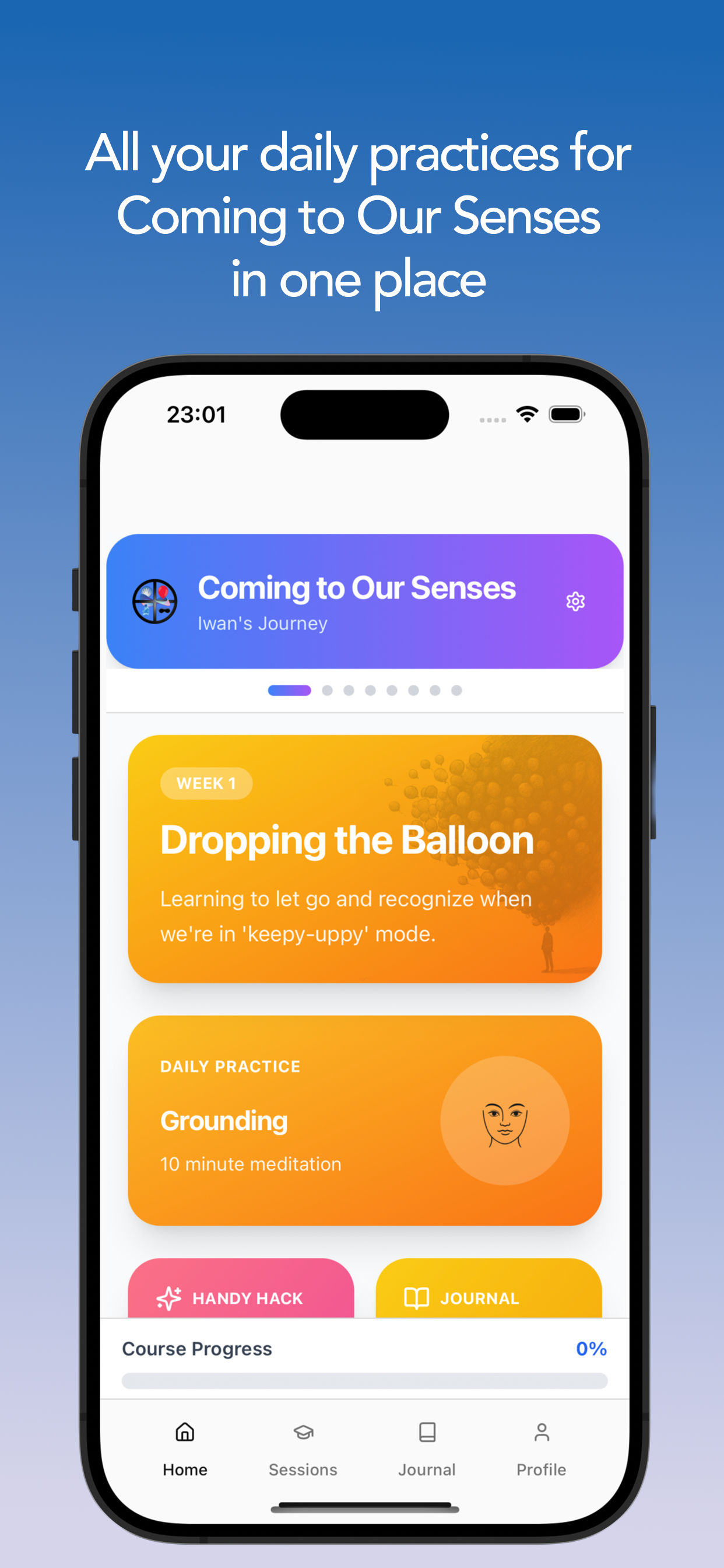
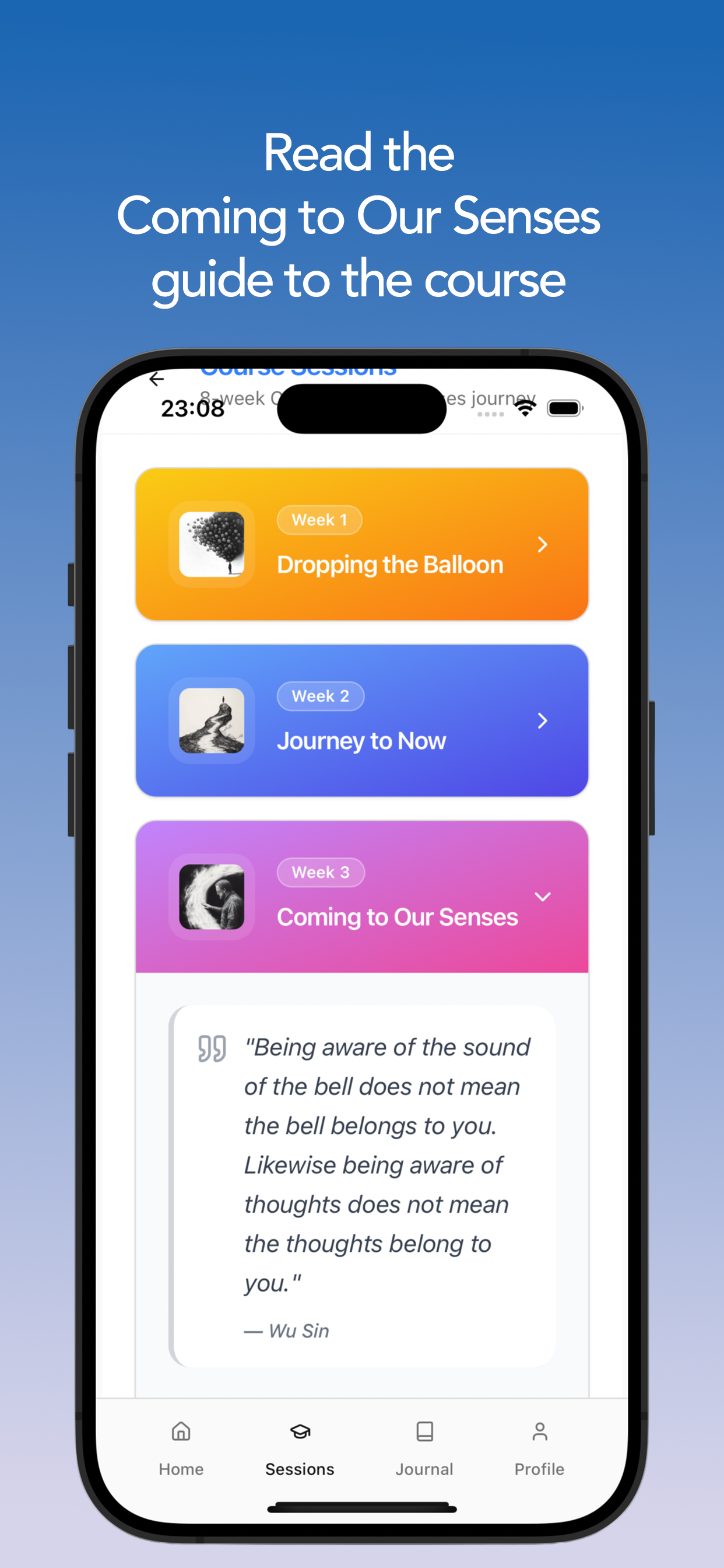
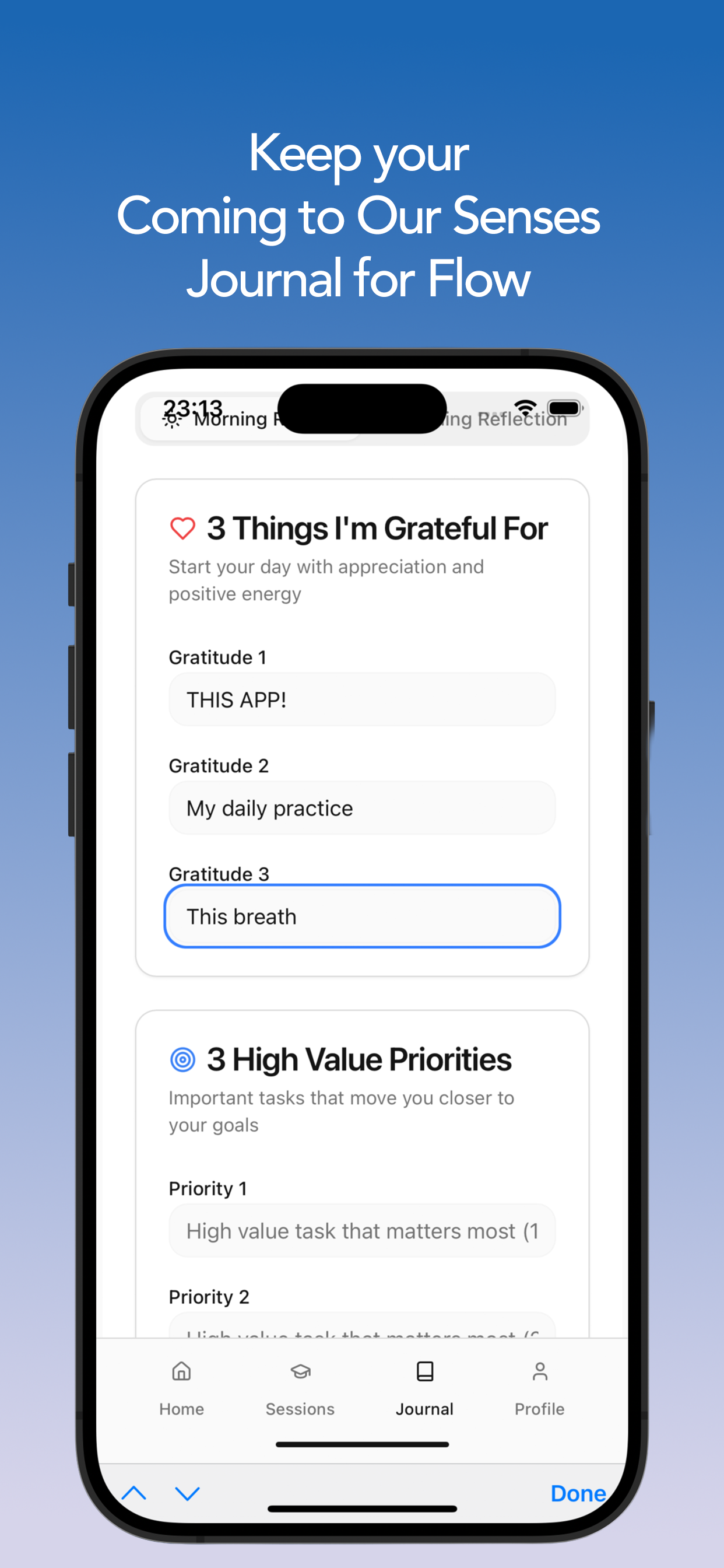
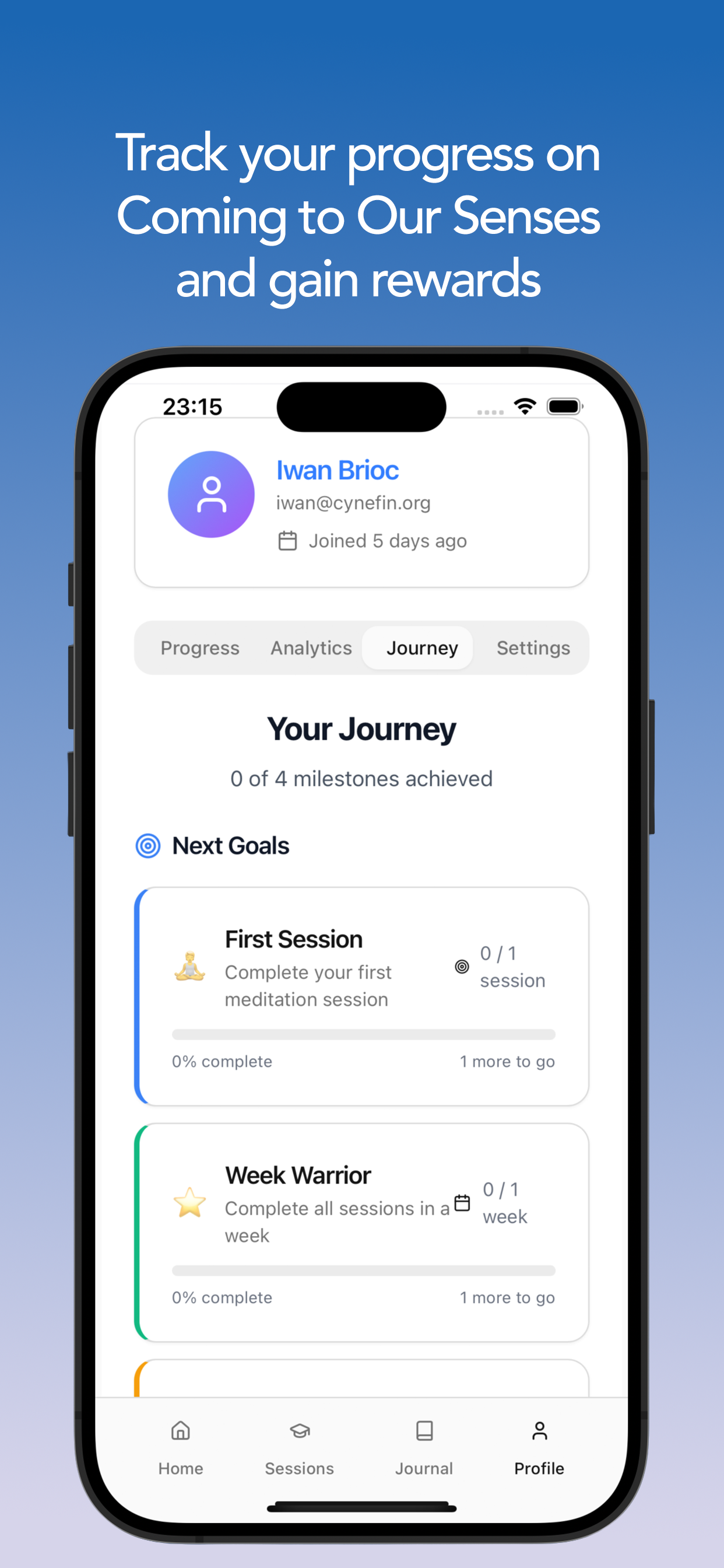
Download the App


The longer answers…
What is Coming to Our Senses?
CTOS for short is A course THAT is for anyone wishing to develop or deepen a mindfulness practice for their own wellbeing And wishes to do so in a fun and creative way among colleagues.
This course combines –
• applied theatre as a process of dynamic enquiry
• mindfulness as a process of personal insight
• group dynamics as a process of sharing and compassion and
• journaling for flow to help integrate soul and purpose
to create a synergy of joyful and profound journeying into the heart of the matter.
The course is taught EITHER over 8 x 2 hour sessions OR over 4 x 3.5 hour sessions. They contain guided meditations, creative challenges and handy hacks to practice between sessions, supported by a guide book and online resources.
If you would like to host a course contact info@cynefin.org
“It helped me reflect on all the issues affecting my personal and professional life and helped me prioritise what is most important.”
NHS Consultant
“I discovered the benefits of mindfulness, which enabled me to feel calmer, in both my body and mind enabling me to view the world differently.”
NHS Complex Care Nurse
How this course is different to other mindfulness courses?
-
Dive into Immediate Experience
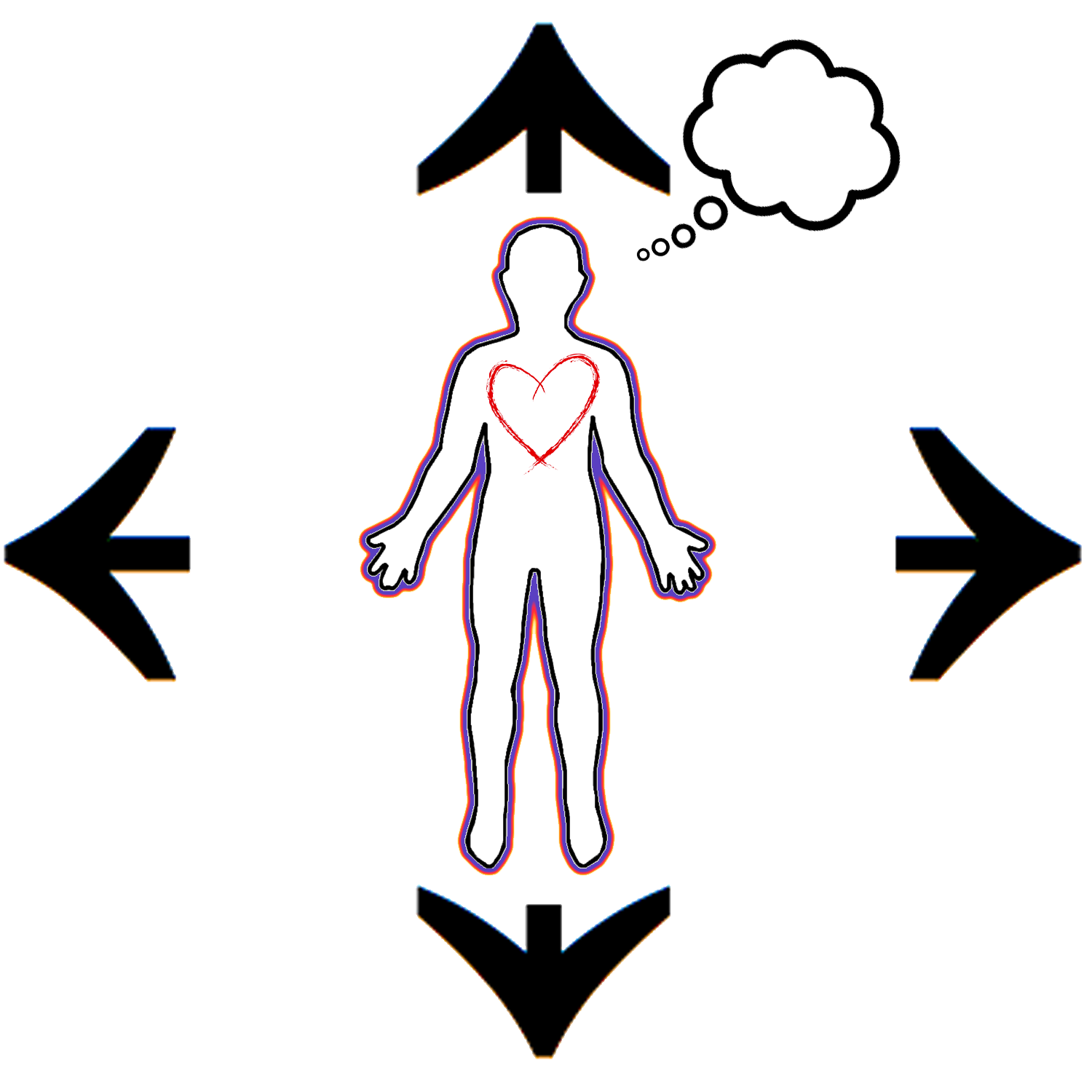
Ever wondered what it's truly like to be you? Our journey starts with exploring your thoughts, feelings, perceptions, and sensations. Together, we unravel how these create the illusion of a separate self.
-

Engage in Creative Challenges
We use Context Oriented Arts to frame each session around a creative challenge. This playful, immersive approach makes learning hands-on and deeply personal. It's not just about acquiring knowledge—it's about transformational, embodied understanding.
-

Journal for Flow
“The Sense of Being Alive” incorporates Sarah Gregg’s unique Journaling for Flow methodology. This daily practice helps participants integrate their experiences and insights into their professional and personal lives, fostering a sense of purpose and fulfillment.
-
Uncover the Mystery
Structured like a murder mystery, our course asks: What kills our peace of mind? Craving, avoidance, and ignorance are the usual suspects. While secular mindfulness tackles the first two, we go further, confronting the ignorance at the core. Think of it as solving a Scooby Doo episode with the big reveal included!
-
“Just stopping, is a radical act of sanity and love.”
Jon Kabat-Zinn.
The aim of this first session is to -
Learn who is here, what we’ll be doing together and why.
Experience the creative challenge of uncovering the source of our agitation.
Practice giving ourselves permission to ‘just stop.’
We’re all playing keepy-uppy with our mind and our lives. Let’s learn how to drop the balloon and notice how it feels.
Being invited to just ‘drop the balloons’ we notice how there is an underlying agitation in the inner hand that wants to keep up the balloon.
Challenged simply to be with ourselves without distraction can bring about different responses. Resistance, restlessness, numbness, torpor or problem solving. Notice how these mimc our stress responses - fight, flight, freeze, flop and fix.
Why do we have a stress response to being with ourselves? This is the mystery you are invited to explore on this course.
Creative Challenge: Dropping the Balloon
Practice: Grounding
Hack: Dropping the Balloon
Journaling for Flow: Gratitude Practice
-
“Once you start approaching your body with curiosity rather than with fear, everything shifts.”
Bessel A. van der Kolk
The aim of this sessions is to -
Learn how the body hold memories and frames the present through past experiences.
Experience compassion towards self and others through witnessing the terrain travelled to arrive here.
Practice anchoring attention in the present moment through awareness of the body.
Our body and memory keep the score of the journey taken to survive and arrive here. Yet to thrive there can only be now.
We map the terrain travelled and explore what it means to be here now.
Creative Challenge: The Journey to Now
Practice: The Seven Stations of the Spine
Hack: Hip, hip hooray!
Journaling for Flow: Gratitude Practice
-
“Being aware of the sound of the bell does not mean the bell belongs to you. Likewise being aware of thoughts does not mean the thoughts belong to you.”
Wu Sin
The aim of this sessions it to -
Learn to use the Three Precious Pills to awaken to stillness, silence and spaciousness.
Experience the world as a labyrinth rather than a maze to access flow states.
Practice awareness of the senses, including thoughts and emotions as senses.
There are more than the five senses, there is the monitoring of intra-states (body sensations), there are emotions and feelings, and there are thoughts. But hidden beneath them all is our sense of being alive.
Through working with blindfolds, we sensitise ourselves to the fluctuating states, and beneath them all a stillness, a silence and a spaciousness that is always there. The place from where we are sensing.
Creative Challenge: Coming to Our Senses
Practice: The Sense of Being Alive: Our attention moves from sense to sense, emotion and thoughts and rests in that sense hiding in plain sight – aliveness.
Hack: Three precious pills
Journaling for Flow: Gratitude Practice
-
“Experience this one thing for what it is, not what you think it is. Be open to what the world is telling you. Life is nothing more than a stream of experiences - the more widely and deeply you swim in it, the richer your life will be”
Mihaly Csikszentmihalyi
The aim of this sessions is to -
Learn how we can bring mindfulness into our movement.
Experience how we open and close towards experience
Practice gratitude as the foundation for flow and engagement with life.
Meditation needn’t mean being totally still, as it has been with the practices we have explored up to now. The object of our attention can just as well be the body in movement.
This involves bringing the mind into the body as the body is in movement and noticing when there is movement in the mind, returning it to the body.
Creative Challenge: First Movement + Hour of the Day
Practice: Mind in Body, Body in Movement, Movement in Mind
Handy Hack: Slow Walking
Journaling for Flow: Gratitude Practice + One High Value Priority + One High Flow Priority
-
“When I look inside and see that I am nothing, that is wisdom. When I look outside and see that I am everything, that is love. And between these two, my life turns.”
Nisargadatta
The aim of this session is to -
Learn how relationships and interactions as opportunities to practice mindfulness.
Experience the agitation of continuous craving
Practice the Four Pillars of Wellbeing to strengthen emotional and mental health
Relationships give us ample opportunity to practice mindfulness! Whether in work or at home.
We turn attention towards the space between. Our relationship with our inner and outer worlds. We expose one of the driving forces that causes our agitation and learn a practice to calm that agitation.
Creative Challenge: The OK Corral + What Do You Really Want?
Practice: What if all there is is this?
Handy Hack: 50:50 Listening.
Journaling for Flow: Gratitude Practice + One HVP and one HFP
-
‘Forget your perfect offering. There’s a crack in everything, that’s where the light gets in’
Leonard Cohen
“If you want the rainbow, you got to put up with the rain.”
Steven Wright
The aim of this sessions is to -
Learn how emotions are signals and how they impact on the body and mind.
Experience turning towards discomfort and embrace suffering, potentially transforming it into joy.
Practice the Five Elements Practice to clear emotional blockages and bring balance.
We lean into the tender parts of ourselves. Inviting the difficult in with radical acceptance and the support of the circle of solidarity forged in the group over the previous sessions.
Creative Challenge: The Gold in the Wound
Practice: Turning Towards the Discomfort
Handy Hack: Five elements practice to release stagnant energy in the organs of the body, stuck from suppressed emotions.
Journaling for Flow: Gratitude Practice + One HVP and one HFP
-
“The purpose of the flow is to keep on flowing, not looking for any peak or utopia but staying in the flow. It is not a moving up but a continuous flowing;you move up to keep the flow going.”
Mihaly Csikszentmihalyi
The aim of this sessions is to -
Learn how how our attention shapes our experience and consciousness.
Experience how thoughts that think they are facts inhibit flow.
Practice scripting and The Flow Journal System to integrate the learning from the course into our day to day lives.
We lay out the whole Journaling for Flow methodology that will help support mindfulness throughout the day.
And introduce a mental health ‘crossfit’ practice to help maintain mental wellbeing.
Practice: Four Pillars Practice
Journaling for Flow: Scripting and Reflection
-
Enough. These few words are enough.
If not these words, this breath.
If not this breath, this sitting here.
This opening to life
we have refused
again and again
until now.
Until now.
David Whyte
The aim of this final session is to -
Learn together the distance travelled and the direction of future travel.
Experience falling awake to the present moment and embracing ‘what is.’
Practice Integrating key practices from the course as ongoing tools for mindfulness.
We look at the journey taken over the 8 weeks using the journey to now exercise and end with one last practice to take forward.
Creative Challenge: The Sensory Poem
Practice: Great Smile Practice
Journaling for Flow: All aspects
How is the Course StructureD?
What do people say about the course?
“I’ve learnt more about myself and gone deeper doing this work than I ever did with any counselling I’ve done previously.”
“Initially I thought I was going to a course where I would be given tools to meditate, but I also have a better understanding of how my mind works and why we think the way we think. Rather than just sitting and talking you’re using these tools to act out your life and your thoughts.”
“Work has been full of upheaval and change, the techniques have taught me to achieve calm, to ‘allow’ negative thoughts but not to entertain them, to ‘flow’ with the inevitable and to find compassion for myself and colleagues.”
“The journaling has made it easier to work through difficult times in my life. It’s helped me to put things into perspective and take action.”
“We’ve all been given the tools to apply in working and life situations…This will be very helpful for me going forward, managing a situation which is out of my control, but what I can control is how I react to the situation. So I feel more empowered to do that now.”
“Interaction with ‘strangers’ in a fairly anonymous yet safe, supportive and non-judgemental environment - this is not normally available to anyone and this had great impact, more than reading a self-help book or online tutorials. There is value in hearing each other’s stories, feeling a connection and realising that you are truly not alone.”
“Like a weight has been lifted off my shoulders.”
“A different way to think about every moment of every day and there’s so much value and wisdom in that.”
“I’ve been handling difficult situations at work better. I caught up on notes and realised I was only three behind, when I’m usually about fourteen. I think I’m just being more effective.”
“It’s so good to have experiences like this that put you in touch with our shared humanity and know that everyone suffers, everyone loves, everyone struggles to quiet the mind.”
“I’ve done a lot of courses before, hoping they’d fix everything, but nothing really changed because I didn’t stick with the practice. This felt completely different. It’s hard to explain, but it’s really made me want to take things forward, be kinder to myself, and step away from that punishing mindset. ”
“I feel back on the planet again. More grounded, more calm, and able to hear and feel my way through life better.”
“I just woke up one day and realised I felt happy. Not because I was trying to, just because I was. That’s stayed with me.”
“It’s been a lot more than I expected. I thought mindfulness might just help me sleep better, but it’s actually made me more aware of myself – where my feelings are coming from, and how to look underneath them.”
“It’s made mindfulness something I look forward to, not another thing on the to-do list. It’s just become part of my life.”
“This course gave me real techniques to manage when I feel overwhelmed and a sense of gratitude I can carry forward.”
“The course has given me an insight into different ways of looking at things and improving how I interact with others. I’ve started introducing meditation into my routine – something I hadn’t done before.”
What evidence Is there thAt It works?
A video of Iwan Brioc presenting the curriculum to Mindfulness Wales
More Frequently Asked Questions
1. What is Coming to Our Senses?
Coming to Our Senses is an eight-week or four-week in person mindfulness course that integrates applied theatre, group dynamics, and journaling. The course offers participants tools to manage stress, improve wellbeing, and foster deeper self-awareness. It aims to help individuals engage with mindfulness creatively and practically through a unique arts-based approach.
2. How is this course different from other mindfulness courses?
Unlike traditional mindfulness courses, Coming to Our Senses incorporates applied theatre techniques to enhance experiential learning. This course encourages participants to engage with their senses, creativity, and emotions in a group setting, using dynamic exercises to reveal the roots of stress and agitation. It also emphasizes journaling for flow and integrates mindfulness into daily life.
3. Who is the course for?
This course is designed for anyone seeking to improve their mental and emotional wellbeing. It is particularly beneficial for professionals who experience high levels of stress, such as NHS staff, but is open to anyone interested in learning mindfulness through a creative process.
4. What are the key components of the course?
Mindfulness practices to help participants be present and manage stress.
Applied theatre exercises that use creativity to explore personal experiences.
Group dynamics to foster connection and shared vulnerability among participants.
Journaling for flow as a tool to reflect and integrate the lessons into daily routines.
5. What kind of activities are involved? Each session involves interactive and creative challenges, such as:
Dropping the Balloon: A mindfulness metaphor using imaginary objects.
Journey to Now: Visual storytelling of life paths using art materials.
Sensory Walk: Participants guide each other in exploring the world through their senses.
The Gold in the Wound: Participants explore emotional pain and reframe it to find personal growth.
6. How long is the course?
The course is presented either as 8 weekly sessions lasting 90 to 120-minutes or as 4 weekly 3.5 hour sessions. Participants are also encouraged to complete home practices, such as guided meditations, journaling and informal mindfulness exercises.
7. What are the benefits of taking this course?
Participants have reported improved wellbeing, greater self-compassion, and enhanced coping skills. By the end of the course, 92% of participants regularly used mindfulness to manage stress, and 79% experienced a noticeable improvement in their wellbeing.
8. How do I apply the techniques outside of the course?
Participants are provided with a Journaling for Flow handbook, a course guide and links to online guided mindfulness exercises that are easy to integrate into everyday life. Many participants use these techniques to manage both personal and professional stress.
9. Is it necessary to attend every session?
While regular attendance maximises the benefits, even those who attended sporadically reported significant improvements in their wellbeing. The flexible structure allows for meaningful progress even if all sessions aren’t attended. Nevertheless, we request a commitment to attend 6 out of the 8 sessions or 3 out of 4 sessions.
10. How do I sign up?
You can apply for a course by registering for one of the open courses at the top of this page. If there are no open courses near you send us your contact details below and we will let you know when a course next opens for registration. Also keep an eye out for local announcements and offerings, as spots can be limited.
11. What if I’ve struggled with mindfulness courses before?
This course is ideal for those who have found traditional mindfulness practises challenging. The blend of creative exercises, open awareness, and self-compassion makes mindfulness accessible to everyone, even those who may have felt discouraged by more structured approaches.
12. How is the course delivered?
The course is delivered in person to groups of 8 to 20 people by qualified facilitators. Typically, it consists of 8 weekly sessions, each lasting 90 to 120 minutes. However, we are exploring alternative formats for effectiveness, such as 4 x 3.5-hour sessions, or a three-day intensive followed by 8 weekly 90-minute online sessions. Some form of in-person interaction remains essential for the success of this course.
13. How much does it cost?
The course is free to NHS Staff in Wales thanks to an Arts Council of Wales, Arts in Health Grant.

Course Enquiry
info@cynefin.org
07961 733708